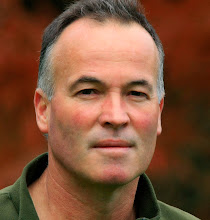
A group of concerned Maori led by Dave Livingston and Australian lawyer and Maori law expert Michael Sharp, have come one step closer to ending aerial 1080 poisoning in the Lake Taupo Forest.
Dave Livingston stated that demonstrating that there was an alternative to aerial poisoning, was the catalyst. After the trial in which trapping was used, Livingston stated "we proved ground control will work. A 2000 hectare trial found only one live possum after monitoring was completed. The AHB was happy and have now given another block above Tokaanu, as a second trial, thanks to Brent Webster".
At the local AGM meeting, land owners unanimously voted against using 1080 poison in future. Great work, team!
Showing posts with label Maori. Show all posts
Showing posts with label Maori. Show all posts
Saturday, December 17, 2011


Monday, February 23, 2009
Pure and natural New Zealand - yes, well, maybe not

Dropping poison from the sky is an indiscriminate form of pest control. How is anyone supposed to control where it ends up, and what eats it?
1080 baits regularly fall in rivers and streams and are eaten by animals such as koura (freshwater crayfish) and eels. Animals that have consumed 1080 sometimes die and decompose in the water, or are eaten by other animals.
Contaminated water washes over watercress which grows down the sides of streams. These foods are regularly harvested by Maori, who also use this water for their water supply. And trampers and tourists unwittingly wash and drink from these streams without knowing that one of the most 'banned' poisons in the world is in there.
1080 poison safety instructions state clearly that the poison is lethal and that poisoned animals should be buried or removed so that there is no risk of further contamination or secondary poisoning. Photos of dead animals in waterways prove that no one takes this requirement seriously.
Surely a department that is devoted to conservation should be focused on preserving the wellbeing of our wildlife, our waterways, and our wilderness areas. Not on poisoning it.
1080 baits regularly fall in rivers and streams and are eaten by animals such as koura (freshwater crayfish) and eels. Animals that have consumed 1080 sometimes die and decompose in the water, or are eaten by other animals.
Contaminated water washes over watercress which grows down the sides of streams. These foods are regularly harvested by Maori, who also use this water for their water supply. And trampers and tourists unwittingly wash and drink from these streams without knowing that one of the most 'banned' poisons in the world is in there.
1080 poison safety instructions state clearly that the poison is lethal and that poisoned animals should be buried or removed so that there is no risk of further contamination or secondary poisoning. Photos of dead animals in waterways prove that no one takes this requirement seriously.
Surely a department that is devoted to conservation should be focused on preserving the wellbeing of our wildlife, our waterways, and our wilderness areas. Not on poisoning it.
Subscribe to:
Posts (Atom)



 Posts
Posts


