Showing posts with label jo pollard. Show all posts

Friday, December 9, 2011

A Plea to International Conservationists Visiting Auckland this week.

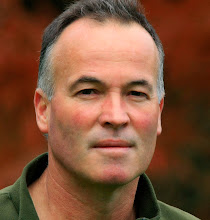
By Scientist and researcher  Dr Jo Pollard (BSc (Hons), PhD, Zoology) and Graham Sperry (Chairman, NZ Wildlands Biodiversity Management Society Inc.)

This week the 25th annual meeting of the Society for Conservation Biology is being held in Auckland, with the theme “Engaging Society in Conservation”. Over 1300 delegates from around the globe are attending, and our Department of Conservation (DoC) is in the limelight. Not only is it being held up as a world leader in pest eradication and innovative conservation, it is attracting intense sympathy for its scientists who are to be victims of government cutbacks.

This morning on TV we were treated to an interview with conservation scientist Paul Beier, president of the Society. Dr Beier spoke of how New Zealand is considered a world leader in ecological crisis management and how he had visited an impressive offshore island here (Tiritiri Matangi) where pests had been eradicated and birds introduced. Dr Beier stated that introduced mammals were a threat to our indigenous species and their elimination was necessary to preserve biodiversity here, and that in his opinion the loss of “100 DoC scientists” would threaten this outcome.


However conference delegates should also be aware that DoC’s past and on-going heavy handedness with broad-spectrum toxins (brodifacoum and 1080, a respiratory inhibitor) and lack of scientific practice have received harsh criticism. A few brave scientists within government departments have called repeatedly for robust (or even adequate) monitoring of DoC activities, which have been firmly linked with plagues of pests and place native species at severe risk - those that are less capable of recovering from wholesale poisoning of the ecological community (species that are most sensitive to the toxins; or vulnerable to plagues of rats, mice and/or stoats; or rare; or slower than others to breed and disperse into vacant habitat).

The concerns of those scientists, and a handful of independent researchers, are available for scrutiny on the website www.1080science.co.nz. To date the efforts of those opposing widespread toxin use have fallen on deaf ears. Indeed our own Parliamentary Commissioner for the Environment (PCE) this year advocated even more use of 1080 poison, especially in NZ’s remote areas. These places are no doubt host to a myriad of undiscovered species (given that only about 50, 000 of an estimated 80, 000 multicellular species in New Zealand have been formally described). A good hard look at the PCE’s justification for this revealed no substance whatsoever, in fact it highlighted the deficiencies in DoC’s methodology (the actions of its so-called scientists) and the ineffectiveness of 1080 in saving anything at all, not even the possum’s favourite trees. The Parliamentary Speaker of the House (paymaster of the PCE) has stated since that the PCE’s assessment was rated only as an opinion.

Other risky long-standing DoC practices include introducing new species to communities with the idea of saving the species (never mind the existing community structure, and the likelihood of introducing diseases) and removing eggs for hand-rearing with subsequent release of naive juveniles (high mortality rates occur during this process, wasting precious genetic resources and creating animal welfare issues). The lack of forethought and monitoring and amount of carnage wrought by DoC’s activities can be seen plainly in an investigation of their newsletters, available on the website www.rarebits.co.nz.

In line with the theme of this week’s conference, a paper to be presented by scientists Boedhihartono and Sayer contends that the most successful conservation efforts are those that involve local stakeholders, especially those fostering the aspirations of people in the poorer rural sectors. Here in New Zealand we have vast potential to use our introduced mammals as resources (commercially, recreationally and as a domestic food source). These opportunities are not sufficiently recognised or fostered here; poison is a favoured pest control tool not just for DoC but also our Animal Health Board (under the guise of controlling Tb) and Regional Councils.

Action from competent conservation biologists, of which there must be hundreds currently in Auckland, is urgently required to displace the unscientific, poorly monitored, rough interference and poisoning mentality that prevails here.

ENDS

To view award winning documentary Poisoning Paradise - Ecocide New Zealand, click here.

Thursday, November 17, 2011

65 Dogs Killed by 1080 Poison in a Single Year

In her report on the use of 1080 in New Zealand, released earlier this year, the Parliamentary Commissioner for the Environment (PCE) made an astounding claim by stating that only 8 dogs were known to have been poisoned by 1080 in the last 4 years.

The Comment caused outrage in rural communities, where it is difficult to find a person who doesn't know someone who has had a dog poisoned.

The following story was released yesterday by Dr Jo Pollard. At Least 65 dogs in a Year Poisoned by 1080 in New Zealand.

To watch the documentary about 1080 poison in New Zealand - Poisoning Paradise Click Here

Tuesday, November 8, 2011

New 1080 Science Website a Powerhouse of Research Talent

A group of scientists have joined together to present the facts and evidence of 1080 poison use in New Zealand.

The new website, www.1080science.co.nz, assembles the findings of the scientists, and other extensive research and facts.

Honest New Zealand politicians, researchers and leaders need no longer take bureaucrats advice, at face value. Fully referenced data and information is now presented in an easy to access way - and it's a damning accumulation of evidence.

To read full story, Click Here.

To view Poisoning Paradise - Click Here

Tuesday, November 1, 2011

How the PCE assessment misled Parliament and New Zealanders

Joint press release by Dr J.C. Pollard and New Zealand Wildlands Biodiversity Management Society.

How the Parliamentary Commissioner for the Environment’s assessment of 1080 poison misled Parliament and New Zealanders

New Zealand has an extraordinary culture of toxin use. Our own environmental watchdog, the Parliamentary Commissioner for the Environment (PCE, Dr Jan Wright) declared in June that we need to spread more 1080 poison aerially across native forests to save birds, and that we need it to help the dairy and forestry industries too.(1) Signs warning of cyanide, pindone and 1080 poison are a standard feature in rural areas. Public notices warn of diquat operations in lakes, and contractors spray broad-spectrum herbicides across our precious braided riverbeds.

Those with vested interests (the Animal Health Board (AHB), Department of Conservation (DoC), Regional Councils and their contractors), and the peculiar breed of greenie who thinks that we should rid the country of every imported species at any cost (seemingly Forest & Bird and Green Party members), defend 1080 poison fervently; as a perfect broad spectrum, non-selective poison, albeit a crude and dangerous tool, with which to achieve their aims. However people who wish to learn about 1080 poison will find misreported facts, wilful blindness and an appalling lack of research supporting its use.

“Another scientist in Dunedin and I independently discovered the horrors of 1080  when we read the material collected by ERMA for its evaluation of this poison in 2007”, said Dr J.C. Pollard. “Unknown to each other, we each embarked on a project that was huge and time-consuming, determined to get this information in front of other members of the public. My project consisted of an ‘index’ of 1624  quotes straight from the documents that ERMA’s Agency used, divided into 49 topics  (e.g. biodegradation, invertebrates, frogs, Tb).(2)  At the end of each topic, quotes from the ERMA Committee’s Decision show its clear bias towards 1080 use, despite obvious risks and an almost complete lack of data. Alexis Pietak’s project(2) was a brilliant review of the research on 1080, showing its bias and lack of validity, and the death records of native birds that show insectivores, omnivores and carnivores are especially vulnerable to 1080 poison.

Meanwhile in the North Island, scientists Pat and Quinn Whiting-O’Keefe had embarked on their own crusade to educate the public that research needed to have some scientific merit and DoC’s research on 1080 had none whatsoever.(2)

“Our work has been embraced by the anti-1080 community but among the general public there is a tendency to believe the PR from DoC and AHB fed to the media”, said Dr Pollard. This is hardly surprising given that the trusting public are likely to have faith in government departments, especially one with high profile, professional publicity campaigns.

 Mr Graham A. Sperry, speaking on behalf of the NZ Wildlands Biodiversity Management Society (NZWBMS) agrees and expressed the opinion that “Many concerned public consider parts of the government as bordering on disreputable because of the activities of DoC and the AHB with regard to poison use.” He gave as an example “The AHB is allocated  tens of millions of dollars of public funds each year, and yet they were set up as a Charitable Society which is not a government entity, and as such are not required to reveal any details of their costs. Contractors who are hired by the AHB directly or indirectly through contracting regional councils have been accused of disguising compensatory payments resulting from incorrect applications of poison”, said Mr Sperry. “Obfuscation of cost reporting may be the reason why the PCE report is so misleading in its comparisons of aerial 1080 poisoning to alternative ground based methods” he said.

Mr Sperry was emphatic that “the exemptions, for more than a decade, of the AHB, even though funded by the public purse, from answering enquiries under the provisions of the Official Information Act, coupled with it also being exempted from investigation by the Ombudsmen have led the public and the NZWBM society to conclude the AHB has plenty to hide. The mistrust of the AHB and the successive governments which created and protect it from public scrutiny has grown particularly since the ERMA review of 1080 in 2006/7”, he said.  Mr Sperry made a further comment that “The PCE report specifically excluded investigating several important issues, including most of the AHB activities involving 1080 poison, even though the AHB is the major user, especially on DoC’s public lands, Forest Parks and National Parks”. In the introduction to the report it was stated that “This report does not cover the AHB’s actions in controlling bovine tuberculosis (TB) in any detail”. Also lacking is adequate recognition of the substantial cost recovery available for ground based control through fur and meat harvesting.

Meanwhile, DoC’s claims about the benefits of 1080 are wishful thinking, not borne out by research. Here’s an example. In an assessment of a 51, 000 ha planned aerial drop of pindone and 1080 to kill rabbits in South Canterbury, the DoC manager wrote: “The disturbance of ‘normal’ predator-prey relationships between the introduced and native fauna of the control area...is not clearly understood in terms of cause and effect but the overall net effect on the ecosystem is one of profound benefit due to the successful control of rabbits” (DoC, 2008). However, there was no sign of this hoped-for benefit when research was carried out by Landcare: “Our hypothesis that rabbits reduce the abundance of ground fauna by reducing vegetation, and by providing prey for mammalian predators (cats and ferrets) that consume ground fauna as secondary prey, was not supported” (Norbury et al., 2009). What a shame the Government did not think instead to support the growing rabbit-based industry in this area. At least four major companies are using South Canterbury rabbit meat to supply domestic and overseas markets.

Dr Pollard went on to say “Dr Wright’s assessment of 1080 poison is merely a collection of these wishful DoC thoughts and when you examine the studies she cited to back them up you find that NZ ecologists tell a far different story”(2) . “Dr Wright ignored their repeated warnings that aerial 1080 results in increased numbers and impacts of rats and other invasive feral species, including cats and stoats. She failed to note that the studies showed it was more effective to use continuous control and a variety of ground based techniques to control rats and stoats, than aerial 1080. Her cited papers failed to support her claim that 1080 poison was beneficial to bird populations, and even the studies on trees failed to show much or any benefit from possum control (with some negative effects, e.g. reduced fruitfall (attributed to rats) and the death of mistletoe plants). She didn’t admit that there was so little information on effects of 1080 on native frogs and reptiles that ERMA was unable to assess the risks. Or that the very small amount of information on aquatic environments, invertebrates, plants and micro-organisms indicates that 1080 may have severe effects on them.”

Dr Pollard continued; “I suspect the PCE didn’t even read Suren & Lambert’s (2006) study that she used to claim 1080 had not harmed populations of freshwater fish. In fact the study was unable to conclude anything about populations of fish. The study was on the impact of 1080 leaching from baits in bags 10m and 100m upstream from cages containing fish. During the experiment some of the cages were stolen, many fish escaped, and deaths were blamed on high rainfall. Overall there was no evidence of an effect of the leached 1080 on the caged fish; but the researchers did find effects of the leached 1080 on freshwater invertebrates, which they decided to discount as not being ‘ecologically significant’.”

“Another paper I think the PCE must have left it up to staff to read was the one used to claim that scientists had assessed 1080 as being ‘moderately humane’ (Beausoleil et al., 2010)”, said Dr Pollard. “This is quite misleading because 1080 is a very cruel poison. In the report cited, the scientists actually said that the word ‘humaneness’ should be replaced with ‘animal welfare impact’ because truly humane control methods are rare. It stated that 1080 had a severe to extreme impact lasting for hours, and because of this it was rated as ‘intermediate’ between cyanide (which causes rapid loss of consciousness and death) at one end of the scale and anticoagulants such as  brodifacoum (which has a severe to extreme impact for days to weeks) at the other end. Having an intermediate impact does not amount to being moderately humane.”

Again the PCE’s claim that we “do not need more water samples” is naive. A reliable method for assessing 1080 contamination of water supplies has not been used historically, as noted by ERMA. Such a method should be identified and used extensively because of the risk to human health and exports: 1080 is known to spread uncontrollably and to pass into both meat and milk, and to persist chronically, for example in dry environments and in carcasses. In mammals, sub-lethal doses of 1080 cause birth deformities, reproductive disorders and damage the heart and other organs. Claims that 1080 does not cause cancer come from a single study on mutation in mice, of which ERMA was unable to get a full copy.

The PCE glossed over the use of 1080 in Tb control, stating only that it would be much more difficult and expensive without it. However research shows that ground control of wildlife Tb carriers is likely to be more effective in protecting dairy herds than aerial poisoning of possums(2). With ground control, Tb can be monitored and targeted in the full range of species affected and specifically where it places livestock at risk. The carcasses of infected pests, a potential source of infection for remaining wildlife, can be removed. Farm boundaries, and our commercial exotic forests are normally readily accessible for ground control of pests without the need for aerial broadcast poisoning.

Dr Pollard, The NZ Wildlands Biodiversity Management Society and many citizens opposed to the use of 1080 and other broad-spectrum poisons contend that the use of aerial 1080 should be stopped until there is compelling evidence that it is not damaging our native ecosystems or causing health problems. Considering the scale of the risk this practice imposes, valid research demonstrating clear benefits would be expected to underlie its on-going use. “The PCE did not manage to find such research. In fact she found so little substance she was forced to call her assessment ‘not overly technical’” said Dr Pollard.

The facts need to be out and for this reason scientists such as Drs Pollard, Pietak, and Whiting-O’Keefe, and groups like NZWBMS continue to expose them.

A formal complaint about the misleading content of the PCE report was jointly presented by the NZWBMS and Dr Pollard to The Speaker of the House of Representatives and copied to current Parliamentary party leaders, The Executive Committee secretary and to His Excellency The Governor General, on 25th October 2011, requesting that the report be declared invalid in its current form. This action has been necessary because The Ombudsmen are excluded from investigating the PCE and it is the office of The Speaker who authorises the fiscal requirements of the PCE.

(1)   PCE, 2011. Evaluating the use of 1080: Predators, poisons and silent forests. Parliamentary Commissioner for the Environment, Wellington. 85 pp. Available at www.pce.parliament.nz
(2)   These documents, and references cited, are at www.1080science.co.nz

Monday, June 13, 2011

New research paper reinforces PCE report as incompetent

This recent research paper (below) on the use of 1080 in New Zeland is consistent with the findings of other credible scientists - Dr Pat Whiting Okeefe, Dr Quinn Whiting Okeefe - Dr Jo Pollard - Annie Potts - Dr Meriel Watts - and the evidence contained in the documentary  Poisoning Paradise - Ecocide New Zealand

The Author indicates in her paper that about 400,000 hectares of forests were planned to be aerially poisoned in 2009, and based some of her findings on this figure. The actual area was over 500,000 hectares, and is expected to be higher in following years. (ERMA - report)  

Click here to view Alexis Mari Pietak's (PhD) report A Critical Look at Aerial Dropped Poison Laced Food in New Zealand's Forest Ecosystems

Here's the summary to the paper ...

SUMMARY

Each year, New Zealand aerially distributes massive quantities of acutely lethal, poison-laced foodstuffs into its forest ecosystems. The toxin most commonly used is sodium monofluoroacetate (compound 1080), an acutely toxic, oxygen metabolism disrupting agent with very high toxicity to most air-breathing organisms. New Zealand ecological conservation officials claim that aerial poison operations are an essential strategy to protect vulnerable indigenous flora and fauna from exotic mammalian pests, and that the benefits of aerial poison operations outweigh their risks.

This manuscript presents a critical review of the existing scientific literature on the non-target effects of aerial poison operations in New Zealand. This review reveals that in this complex, multifactor situation, the relevant science has been selectively interpreted, selectively studied, and moreover, left grossly incomplete in its scope, possibly in favour of non-environmental, economic interests.

Using the existing scientific information on non-target effects of aerial poison operations, a cost-benefit analysis employing a numerical scoring system was performed. This cost-benefit analysis, which compared the costs and benefits to native species for aerial poison operations versus unchecked possum populations at their peak density, indicated that aerial poison operations have twice as many costs to native species as benefits, and that aerial poison operations were twice as costly to native species as unmanaged possum populations at their peak density.

The potential for widespread poisoning of New Zealand’s large number of endemic and threatened/endangered omnivorous, insectivorous, and carnivorous bird species by the uncontrolled distribution of poison-laced food throughout an entire ecosystem is a serious issue worthy of international concern and immediate action.

A Critical Look at Aerial Dropped Poison Laced Food in New Zealand's Forest Ecosystems

Investigation into the effects of 1080

An introduction to the Index to the Environmental Risk Management Authority 1080 Documents ... www.1080science.co.nz 

Sunday, June 12, 2011

"78 sheep dying after grazing an airstrip ... 20 weeks after the operation"

The launch of www.1080science.co.nz is a valuable addition to the abundant evidence mounting against the use of 1080 poison in New Zealand. If you had any doubt about the humaneness of 1080, click on the animal welfare link on the site.

For example, the scientific evidence presented to the ERMA review on 1080 states that the time to death, from ingestion, for one of the target species - the Brushtail Possum - pictured here - (native to Australia) - is from 5, to 97 hours! 

How about  - 14.4 to 522.5 hours (that's 21 days) - for the Blue Tongued Lizard! 

If that doesn't get you, how about ... "cases included ... 150 sheep dying 10 weeks after toxic carrot had been laid in paddocks ...78 sheep dying after grazing an airstrip used to load toxic carrot bait ... 20 weeks after the operation."

And our own PCE (Parliamentary Commissioner for the Environment) wants us to drop MORE 1080 poison, and inflict more of this outrageous animal cruelty! I rest my case.


Good on Dr. Jo Pollard for highlighting these issues, a great New Zealander!

The following is the introduction to the site www.1080science.co.nz ...

This Index demonstrates:
1. The appalling quality of the data used by ERMA in making its decision and setting controls.
2. The risks to biodiversity and human health caused by 1080.
3. The paucity of valid data supporting the use of 1080 by the Department of Conservation (DoC) or the Animal Health Board (AHB).
The Index was designed to make access to the information used by ERMA easy and fast. It is arranged into 48 subject sections (e.g. bats, invertebrates, Tb). Each section contains quotes from the following documents, in turn:
1. Agency’s Appendices A-T (the information gathered for ERMA’s Committee by ERMA’s Agency)
2. Applicants’ References (scientific references supplied by DoC and the AHB)
3. Submitters
4. Committee Decision
For each subject, the quotes from the Committee Decision come last, so you can examine how the Committee has responded to the information given to it.

It is intended that the quotes in this index are not used in isolation but as a means of accessing the information used by ERMA. For each quote in the Index the name of the original document and the page number are provided so you can find it in the original document (available on the ERMA website www.erma.govt.nz .

Wednesday, May 25, 2011

1080 poison: Science and Facts

Dr Jo Pollard (BSc (Hons, PhD) has spent 2 years analysing and investigating the evidence and research presented to the ERMA reassessment on 1080 use in New Zealand.  She has just loaded the ERMA science to a website www.1080science.co.nz
In part of her press release, yesterday, Dr. Pollard stated ...


"Our remaining native species need all the genetic diversity they have if they are to survive forthcoming challenges such as drought, storms, disease and habitat modification, therefore they should be managed with extreme care. New, unique species are still being discovered regularly, making nonsense of claims that DoC knows what its doing with aerially spread poisons. DoC’s legal duty under the Conservation Act is to manage natural resources for conservation purposes so their willingness to allow the killing of massive numbers of native animals is nothing short of criminal." ...

Click here to read her full report
Press release - 1080 poison: Science and Facts

More and more evidence against the use of 1080 poison continues to surface. 
Thank goodness for honest and brave scientists like Dr Pollard, willing to put truth ahead of inDoCtrination, and the status-quo. 

Saturday, March 5, 2011

Another scientist adds her weight to the 1080 debacle

Background to the Index to the 1080 Decision

Dr Jo Pollard, an independent scientist from Otago with a BSc (Hons) and PhD in Zoology has created an “Index to the Environmental Risk Management Authority 1080 Decision Documents”.

This Index came about because prior to 2007 Jo had many unsatisfying debates with a friend from DoC about the value of 1080 in protecting NZ’s biodiversity. It was inconceivable to her that a universal poison would only kill the animals that DoC wanted it to, and her friend’s arguments never seemed to contain any substance. She saw ERMA’s 1080 review as an opportunity to finally see the evidence that her friend believed in so strongly, and started reading the evidence put forward by DoC and the AHB.

However the more she read the less convinced she became that there was any value at all in 1080. In fact it seemed more likely to be having severe negative effects on biodiversity and possibly human health.

Jo made written and oral submissions to ERMA and when, incredibly, the ERMA decision was to approve further, more widespread 1080 use, she vowed to make time to review and present the evidence she had read in such a convincing way that people ignorant of its real effects could not possibly argue with the facts.

The result is the Index. Jo has taken 1624 quotes from the material used in the ERMA decision, and re-arranged them into 49 tabulated sections, such as cancer, biodegradation, biodiversity etc. Each quote appears in the Index along with its source and a reference number. The Index is designed to make access to the information used by ERMA easy and fast.

Professionally, Jo is dedicated to good quality science and expects that government departments responsible for protecting New Zealand’s biodiversity should be too.


Her Index demonstrates:

1.      The appalling quality of the data used by ERMA in making its decision and setting controls.
2.      The serious risks to biodiversity and human health caused by 1080.
3.      The lack of any valid data supporting the use of 1080 by the Department of Conservation (DoC) or the Animal Health Board (AHB).
Below is a flyer Dr Pollard has created to highlight a few of the issues assembled from the ERMA review.
A copy of her full report is available as a bound index of 186 pages with 49 subjects (eg bats, lizards, TB) for $45, or on disc for $10 from P.O.Box 35, Outram, Otago.

Dr. Jo Pollard .....
The 1080 Decision documents(1) contain clear evidence that 1080:
Spreads as dust throughout and beyond aerial application zones, and rapidly up food chains, rapidly in water.   


Is toxic to all forms of life: microbes, algae, terrestrial plants, invertebrates, fish, birds, mammals. Native birds killed include fernbirds, keas, kakas, moreporks and massive numbers of insectivorous birds such as tomtits and robins.


Persists in carcasses, baits, tree canopies, dry places, cold places, hot places, cool water, water lacking aquatic plants, acid soils, other soils, and possibly anywhere at low concentrations.  


Reaches high levels after uptake e.g. in fish, insects & koura.


Causes large increases in rat populations starting from nearly zero to plagues within 2 years, mouse plagues, and rapid buildup of possum numbers, as well as increases in other invasive pests (eg mynas and rosellas).


Is likely to cause “prey switching”, eg when rats are killed, stoats eat birds instead.


Has not been shown to be of any benefit to biodiversity (reviewed by Whiting & O’Keefe, 2007).


Causes birth defects, damage to reproductive organs, reduced fertility, and damage to other organs including heart and brain, in mammals and other animals.


Contaminates factory and field workers.


Is particularly risky to human health because it is so toxic, hard to detect, has a long latency period before symptoms occur, and has no antidote.


Is unsuitable as an effective poison because
· Toxicity varies enormously with temperature, and between individuals, strains and species of animals, and between pieces of bait. Bait shyness of sub-lethally poisoned possums is a significant problem in 1080 operations · Genetically resistant strains of pests appear when it is when applied repeatedly · Analysis for 1080 contamination is very expensive.


Was unfairly and inappropriately discussed with Maori in the 1080 reassessment.


Causes prolonged animal suffering, with sickness, death and permanent debility.


Is not the best use of farmers’ money for Tb control. All Tb-carrying wildlife & stock in (typically) isolated “hot spots” of Tb should be targeted, using humane, safe methods, if the AHB’s goals can be justified.


Has been under-reported, due to degradation in samples under field conditions and during frozen storage, and adsorption onto any filter paper used in testing.


Is of more danger to dogs now since the ERMA decision: the poison is more widespread, signs are smaller and must be removed after 6 months, and no longer have to give 3 days’ warning.


Has harmful breakdown products including fluoride and (highly toxic) fluorocitrate.


Was  approved without sufficient validation, use of expert opinion, or objectivity, as required by law.

(1) The documents used by the Environmental Risk Management Authority in deciding on continued 1080 use in 2007: the Agency's E&R report, the Committee's decision, and the Applicant's (Animal Health Board and Department of Conservation) references. Visit ermanz.govt.nz or buy the index to the ERMA 1080 decision. Details below.


A copy of the full report is available as a bound index of 186 pages with 49 subjects (eg bats, lizards, TB) for $45, or on disc for $10 from P.O.Box 35, Outram, Otago.